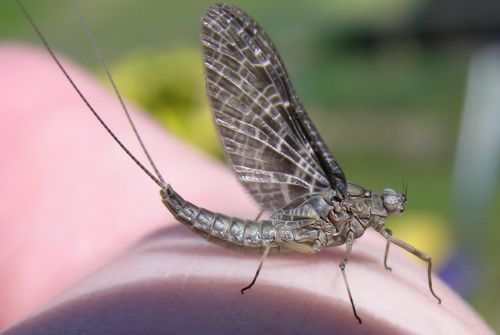
Fly Fishing Mayfly … photo by Ruben Breitkreutz
Fly Fishing Mayfly Nymphs & Adults …….
Mayflies are found in fresh water lakes & rivers around the world. There are approximately 2,500 different species known worldwide with over 600 species in North America alone. The Mayfly is very pollution sensitive, which means if mayflies are in or around the water should be of a good quality.
The Mayfly life cycle consists of two underwater stages (egg and nymph), and two terrestrial stages (dun and spinner).
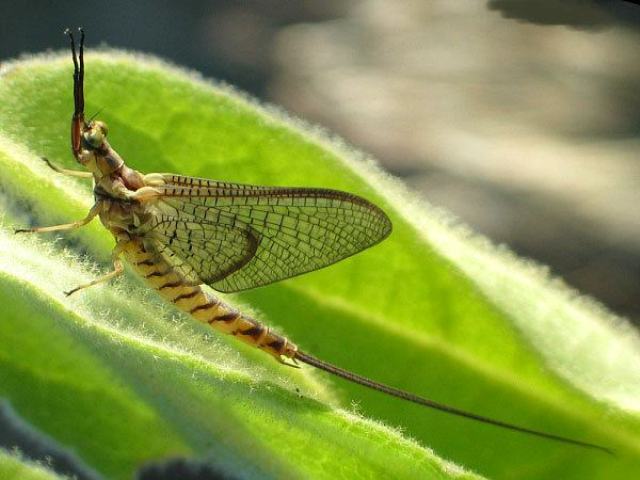


Fly Fishing Mayfly | Nymph Behavior:
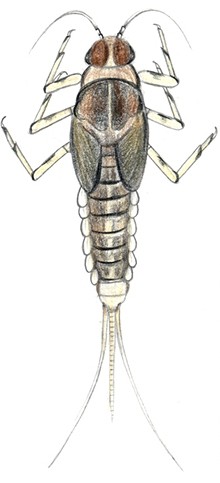 After hatching, the nymphs feed and grow through several instars before reaching maturity. This takes from a few months to a couple of years with the average being about one year. During this time they live, feed and grow amongst bottom weeds. They are commonly found in water depths from only a few feet to as deep as twenty five feet of water.
When the time is right, emergance of the adult can occur both under and/or above water depending on the species. For several days leading up to their adult emergence, Mayflies can make many false starts beginning to ascend then settling back down to the bottom. They finally emerge usually in large numbers, swimming slowly upwards with pauses until they reach the surface to hatch.
Near or at the surface they stop swimming, a split forms at the back of their thorax, and the adult Dun crawls out of its shuck or nymph skin.
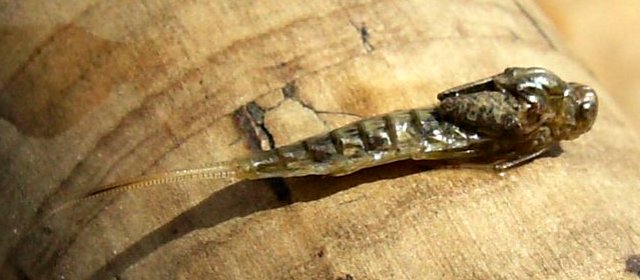
Fly Fishing Mayfly | Adult (Dun & Spinner) Behavior:
Once free of it’s nymphal casing, the dun will sit on the surface of the water for up to several minutes, longer on darker and cooler days. They look like little 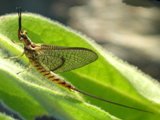 sail boats as they drift with wings held together upward. Once the wings are dry they fly away to shore to shed another skin and, within a few short days, develop into a sexually mature Spinners.
They return to the water as spinners and mate in dancing midair swarms. Several days after mating, the fertilized female returns to the water surface to lay her eggs, when finished she will lay spent on the surface with her wings spread out flat and the life cycle is complete.
The Mayfly dun and spinner are the most important dry fly of the summer.
Fly Fishing Mayfly | When to Fish them …
Nymph: The Mayfly nymph can be fished year round as it is always present along lake bottoms. They are most available to trout just prior to and during emergence, usually around midday in cloudy conditions, from mid spring to mid summer, and again in early to mid fall.Nymph casings and newly hatched duns on the surface indicate a hatch.Trout will begin feeding on the false starts of the nymphs near the bottom prior to emergence with no surface sign evident so consider time of year and look for trout actively feeding near the bottom. As the hatch progresses trout will feed on the nymphs from the bottom to the surface of the water.
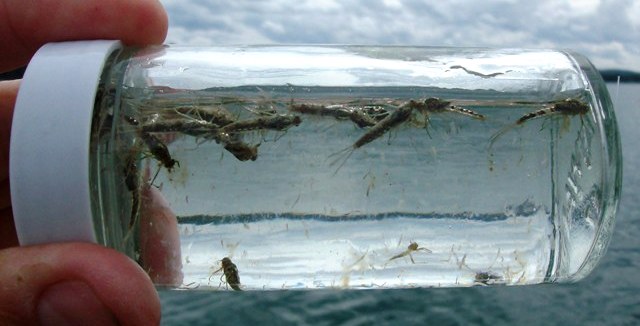
Fly Fishing Mayfly | Trout Throat Sample
Dun: During mayfly hatches when duns are visible on the lake surface, usually in mid spring to mid summer and again in early to mid fall. Watch for fish rising on the surface either boiling or sipping and when success with a nymph pattern is waning.
Spinner: Several days after the duns hatch the spinners will return to lay eggs. Watch for spent or dead females on the waters surface with wings spread out flat flush with the water. Trout will be rising for them.
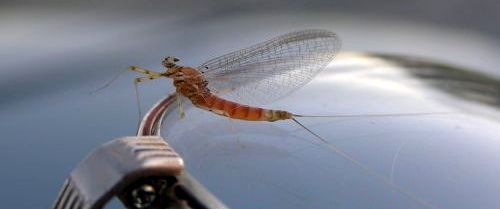
Fly Fishing Mayfly … photo by Ruben Breitkreutz
Fly Fishing Mayfly |Fly Presentation …
In water up to 10 feet deep use a floating line with enough tippet to get to the lake bottom . Attach either sinking tippet, sinking dressing or a weighted fly to present quickly. A tippet size of 4x – 6x works well.
Use a Type II Sinking line with a 6 to 9 foot leader for water over 10 feet deep.
Nymph
In the absence of an emergence present nymphs near or on weedy bottoms of shallows, shoals and drop offs by casting the line and letting the fly settle to near or on the bottom. Work the fly slowly along the bottom 1 inch per second with short quick jerks every 20 to 30 seconds to imitate crawling amongst the weeds.
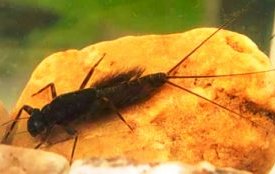 To imitate false start activity of the pre emergence, retrieve 3 inches over 2 to 3 seconds and then pause for several seconds to let the fly settle back down to the bottom. Repeat the process.
Later in the hatch imitate swimming emergers by retrieving the fly upward through the water column with several 2 to 3 inch per second retrieves and then pause for several seconds. Repeat the process until you have retrieved the entire line and leader and then cast and repeat.
As feeding approaches the surface use a dry (floating) line to present an unweighted nymph just below or on the waters surface and twitch slightly to imitate the nymph struggling to break free of it’s casing. Remember, rising fish indicate a take closer to the surface.
For all floating line presentations in mild to moderately windy conditions, quarter the wind and let it drift through the desired area, keep the line tight and retrieve when the line is downwind.
Always vary retrievals between short jerks & continuous strips and alter the speed until you find what works. 😉
Dun
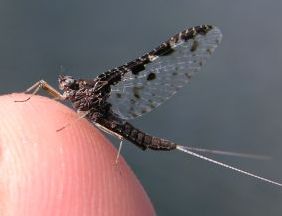
Fly Fishing Mayfly .. by Ruben Breitkreutz
Fish a Dun fly pattern on the surface over submerged weed beds from where the nymphs are rising. Present the dun in the path of rising trout and let it sit still. When the trout are feeding more sporadically, quarter the breeze and let it drift until downwind then recast.
Use a floating line with tapered leader and tippet – tippet size 4x – 6x is perfect. Use a floating dressing on the fly and tippet.
Spinner
Fish a Spinner mayfly pattern near concentrations of spent naturals and trout feeding activity. Keep the fly still with occasional twitching.
Use a floating line with tapered leader and tippet – tippet size 4x – 6x is perfect. Use a floating dressing on the fly and tippet.
Fly Fishing Mayfly |Mayfly Fly Patterns:
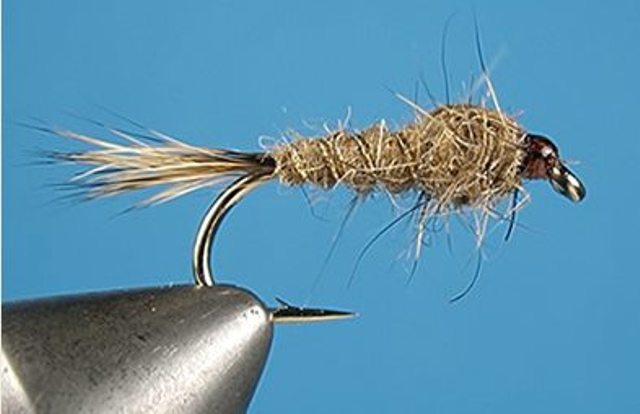
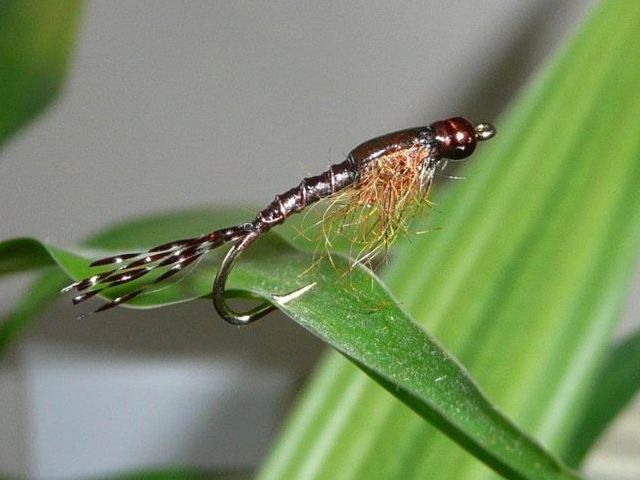
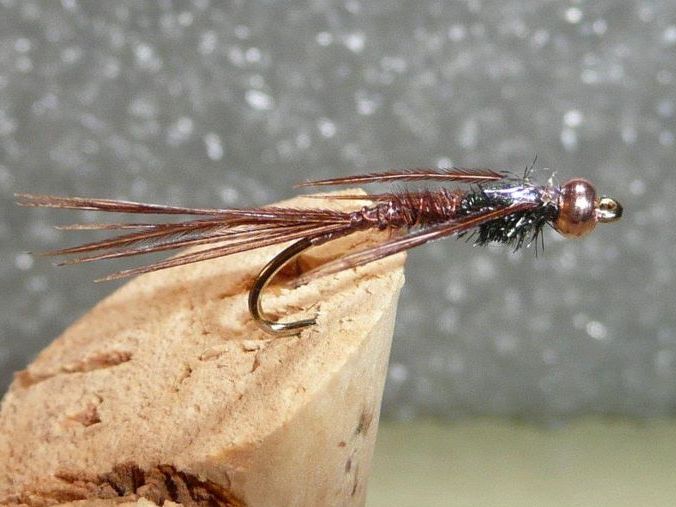
Nymph: Half backs, 52 Buick, Hares Ear Nymph, & Blue Dun Nymph in sizes #8 to #16 with Olive Green, Light & Dark Brown, Dark Grey body colors & Black or Yellow wing cases.
Dun: Parachute and post patterns such as the Blue Dun Parachute, Olive Dun, March Brown & the good old Tom Thumb in sizes 12 to 16.
Spinner: Parachute and spent wing patterns such as the Spent Drake, Clear Wing Spinner & Trico Parachute in sizes 12 to 24.
Fly Colors for both Duns & Spinners in Dull Green, Brown & Grey with Minor Colors in Yellow, Bronze & Black (*Important: Try to match the naturals underside!)
Fly Fishing Mayfly Nymphs & Adults | Mayfly Pattern Photos:
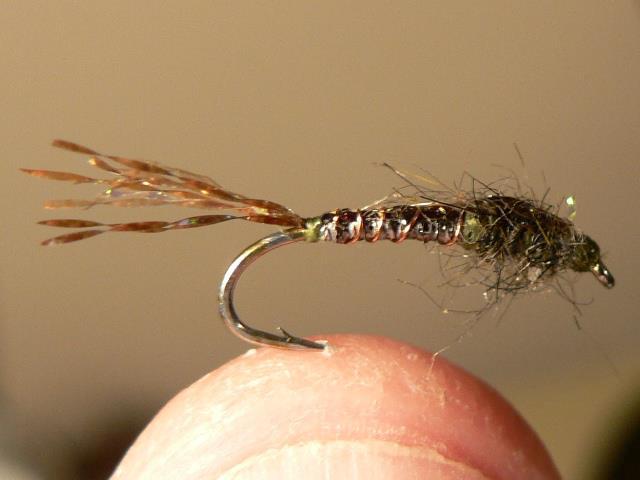
Fly Fishing Mayfly Nymphs & Adults | Mayfly Tying Posts:
- 10 Proven BC Still Water Fly Patterns
- Alpha Baetis Mayfly Nymph Fly
- Covert Nymph (Threadless) Body Fly Pattern
- Flashback Pheasant Tail Nymph Fly
- Olive Shuttlecock Emerger Fly
Fly Fishing Mayfly Nymphs & Adults | Youtube Video Playlist: